Major Shift in Nigerian Tariff Policy: Strategies for Overseas Expansion Amid Port Congestion, Customs Delays, and Rising Costs
A recent piece of information has quickly gone viral in foreign trade circles: Nigeria's tariff system is undergoing a major overhaul, compounded by port congestion and tightened customs clearance policies, significantly amplifying uncertainty across the entire import and export chain. For companies currently operating or planning to enter the West African market, this is not just ordinary policy fluctuation, but rather the beginning of a systemic risk reassessment.
From a policy perspective, this round of adjustments is not accidental, but rather guided by a clear industry direction. As the core idea illustrated in the image is—"protecting domestic industry and promoting localized production"—the Nigerian government is proactively raising import barriers through tariffs to guide manufacturing back to the country. Especially in industries like automobiles, increasing import costs forces companies to invest and build factories locally. This logic may also be replicated in key sectors such as energy and energy storage.

Meanwhile, the Nigerian government has set a tax revenue target of 9 trillion Naira by 2026, meaning that fiscal pressure is being transmitted to the trade sector. Tariff increases are only the first step; more crucial is the tightening of supporting enforcement measures—such as eliminating the "fast-track clearance lane." This directly leads to a real problem: decreased efficiency.
Currently, the APAPA port is experiencing severe congestion, with a large number of containers stuck, forcing a significant extension of customs clearance times. What was originally a few days may now extend to weeks or even longer. This increased time cost further translates into a series of hidden costs such as tied-up capital, warehousing fees, and demurrage charges. In other words, companies are facing not only rising tariffs, but an overall increase in "comprehensive customs clearance costs."

More alarming is that this situation is still in a "standoff and negotiation phase." Policies have not yet been fully implemented, but the market has already begun to react in advance, with a large number of containers stuck at the port, amplifying supply chain uncertainty. This stage of "policy uncertain but impact already apparent" is often the riskiest time.
So, in this environment, how should Chinese companies, especially new energy and energy storage companies, respond?
First, they need to reassess the sustainability of the "pure export model." The past reliance on price advantages for complete machine exports is being eroded by high tariffs and inefficient customs clearance. In the future, a more competitive approach will be the "localization + light manufacturing" model, such as CKD/SKD assembly and joint ventures.

Secondly, it's crucial to strengthen the "system solution capability" of products. With longer customs clearance cycles, customers prefer suppliers offering stable, reliable, and complete one-time solutions rather than fragmented procurement. This is precisely the direction ONESUN has been continuously strengthening in recent years—upgrading from a single battery product provider to a comprehensive energy solutions provider.
For example, ONESUN's product portfolio already covers communication base station batteries, integrated solar systems, residential and industrial-grade photovoltaic energy storage systems (BESS), and the PAYGO Solar solution for the African market. This complete closed loop "from power generation to energy storage to power consumption" enables customers to achieve stable deployment even in complex environments.

More importantly, under the current policy context, localization capabilities will be a decisive factor. ONESUN not only provides standardized products but also offers OEM/ODM customized solutions for B2B customers, helping partners achieve rapid implementation in Nigeria. For example, through modular design, detachable battery structures, and local assembly support, tariff pressure is reduced while improving project delivery efficiency.
From a technical perspective, the African market demands extremely high stability and durability. ONESUN utilizes a lithium iron phosphate (LiFePO4) battery system, which offers significant advantages in cycle life, safety, and high-temperature adaptability. This is particularly crucial in situations involving port delays and unstable logistics—once deployed, equipment must operate stably for extended periods, minimizing maintenance reliance.
Finally, and most importantly, cash flow management will become a matter of life and death for businesses. Extended customs clearance cycles mean longer payment collection periods, requiring companies to plan their finances in advance and optimize their inventory structure to avoid large-scale congestion at ports.

In summary, this round of tariff and clearance policy adjustments in Nigeria is essentially a signal of industrial restructuring. In the short term, it presents challenges of rising costs and declining efficiency; in the medium to long term, it represents an opportunity to drive upgrades in local manufacturing and energy infrastructure. For prepared companies, this is not only a risk but also a window of opportunity to reposition themselves in the market.
In an era of increasing uncertainty, true competitiveness is no longer just about price, but about the "ability to adapt to change." Companies like ONESUN, with product strength, system capabilities, and localized support, will have a greater chance of standing out in this changing landscape.

Article Source: Lithium battery manufacturer - ONESUN China
Featured Recommendations:all in one ess , complete solar kits ,solar power station , portable solar generator , liFePO4 solar battery ,off-grid solar systems, telecom lithium battery rack , Off grid rural solar power systems,communication base station battery, all in one solar inverter
Related Products
lithium iron battery-51.2v 400ah 20.48kWh
48V 200Ah Telecom Lithium Iron Battery | Rack-Mounted LiFePO4 Battery for Base Stations
PayGo Solar Energy Storage Solution | 1kW 2kWh All-in-One ESS
PAYGO Rent To Own Solar Energy Storage-MSF-250W 1kWh (4g+paygo)
Complete Solar Kits-6kw 15kwh, Easy Installation
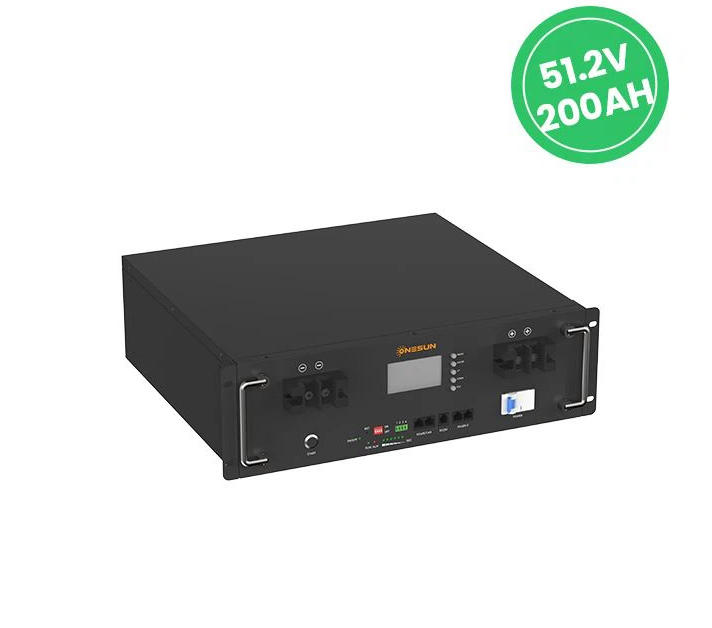
Communication rack battery-R-51.2V 200AH-Telecom base backup power
Wall-mounted Battery
Rack-mounted Battery
Floor-standing Battery
High-voltage Rack-mounted Battery
High-voltage Stacked Battery
Lead acid Replacement Battery